
 You may be the furthest thing from the King of real estate in your community, wherever that is in whatever part of any city or town in Canada. But if you understand the truth of the saying that Content is King and are able to harness the power of content when it comes to promoting yourself and your services as a real estate agent then you may be a lot closer to usurping the throne than you think. Enough with the regal references though, and in truth it’s very rare that there’s one realtor who stands high above all others in any city in Canada. It’s a competitive business, and most realtors who are more successful than others are only marginally more successful really. A lot of it will come down to real estate marketing in Canada, and nowadays content marketing is a big part of that.
So if you’re fairly capable with writing and know your stuff when it comes to real estate you’re set up quite nicely to start talking advantage of that. If not, you can do what many realtors nowadays are doing and hire someone who does have a way with words to write a blog for you that you publish once a week on your real estate agent website. Ideally you’re going to also be tying this into social media for real estate efforts, and that may be another area where you want to pay someone to handle accounts on platforms for you if you’re not social media savvy either. Don’t worry, there are plenty of successful and high-earning realtors that aren’t good with either of those things, and they’re not all old either.
You really can boost your real estate leads with smarter content. When potential clients are redirected to your site and find useful, engaging content there that helps them become more informed as it relates to their buying / selling plans then it goes a long way to increasing the chance they reach out to you and want to talk. That’s a big part of real estate lead generation right there, and if the content you publish is SEO-keyword optimized it’s going to mean you have better SEO for your site too. All of these aspects are primed to work in your favour if you have good content.
What can be the challenge for agents – and even ones who are capable enough with writing – is to keep coming up with good and relevant topics and having a plan for them as to when those pieces of content is going to be published. This is where a content calendar comes into play, and using one is a really good idea if you’re planning to start publishing content regularly via the blog on your real estate agent website. It’s always best to have a plan, and with these ones it’s also a good reassurance that you always know what’s on deck for your blog for the near foreseeable future.
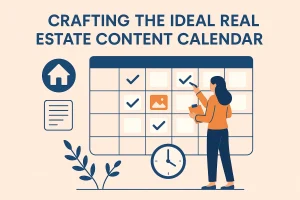
So what we’ll look at with this week’s blog entry is how to craft the ideal real estate content calendar. It’s not a challenging task by any means, but you can save yourself some time and get it right that much quicker if you know what you’re doing with it.
Content as a Strategic Tool
You can start here by seeing your new content calendar as more than just a posting schedule. Instead it’s better to see it as a strategic tool for streamlining content creation, setting consistent expectations, and optimizing your time and resources. There are definitely benefits to having a content calendar as you aim to do better with real estate marketing in Canada. For starters it helps you to stay organized and consistent. Posting quality content regularly fosters trust and credibility and a calendar helps you stay on top of deadlines, avoid content gaps, and post consistently across platforms.
With a calendar you can also improve your abilities with streamlining content creation. Planning content in advance makes creating high-quality content much easier and allows you to batch your work. You’re also almost certainly going to have a better brand voice as a recognizable realtor in your area. That’s because a calendar helps you craft content that aligns with your brand voice, values, and goals.
More emphatic engagement with your audience is also likely if you develop a good content calendar and adhere to it as you publish real estate-related content regularly. Strategic planning lets you create content that resonates with different client segments and with it you can increase engagement and be boosting leads. You’re also going to be much better set up to be measuring performance. Having a calendar and see what you’ve posted and when in the past lends itself to measuring which content performed best and adjust your strategy accordingly as you move into the coming months.
Here’s what needs to be taken into consideration as you create your own real estate content calendar.
Step 1: Define Your Audience
All good content calendars start with defining a target audience. Are you aiming to reach first-time homebuyers, real estate investors, renters, or sellers? There are going to be different interests and pain points for each group, and understanding them will guide you in crafting the right content. First-time buyers may need guidance on home financing, property types, and the buying process, while home sellers may be interested in home staging tips, understanding market trends, or pricing advice. Realtors often target investor buyers too, and these potential clients will be receptive to content on rental income potential, market forecasts, and property management.
Step 2: Set Clear Goals for Your Content
Defining objectives for their content keeps agents focused and helps them measure success. Here’s where you should focus as you define objectives for your real estate blog content and determining what’s best for your content choices each month.
- Brand Awareness: Focus on content that showcases your expertise and builds credibility
- Lead Generation: Create content with strong calls-to-action (CTAs) to drive traffic to your website or landing pages
- Client Engagement: Create valuable, relevant, and engaging content to increase interaction with your audience
- Education: Develop informative content to educate your audience on buying, selling, or investing
Step 3: Choose Your Content Types
If your aim is to boost your real estate leads with smarter content then variety is going to be important and a real means to ensure that your content isn’t the same as what other realtors are publishing on their sites. Some types of content are better than others when it comes to helping you achieve your goals and keep your audience engaged. The first one to mention is blog posts. They’re very good for educating your audience and can cover topics like market trends, neighbourhood highlights, buying guides, or selling tips. Next up are social media posts, with short but engaging ones that are geared to reach a broad audience with different content formats, from videos to infographics.
You can also consider videos and virtual tours. These days many agents are choosing to showcase property listings, give neighbourhood tours, or explain complex topics. Emails and newsletters can be good too, and they’re effective for keeping clients updated with new listings, market insights, and personalized recommendations. Infographics and visual content can be ideal for simplifying complex topics, like mortgage rates or the steps of the buying process. Give some thought to testimonials and case studies too. These are social proofs that build trust and providesreal-life examples of your success in helping clients.
Step 4: Determine the Best Platforms for Each Type of Content
Once you’ve chosen your content types, decide where each piece of content is going to be published or shared. This is about choosing the right platform most of the time, and here’s where most realtors are placing their focuses these days:
- Instagram: Great for visual content like listings, neighborhood highlights, and client testimonials
- Facebook: Ideal for community-building, sharing blog content, and live video updates
- LinkedIn: This platform is where your focus should be if you want to target other real estate professionals, investors, or high-end clients.
- YouTube: A perfect place for video content like property tours, market analysis, and educational tips.
After that you’ll be turning your attention to your website for the publishing of all blog content. Own your content and build your SEO with consistent blog posts on your website. Email marketing for real estate can also be a part of this, and it’s especially good for nurturing real estate leads.
Step 5: Plan Your Content Frequency and Post
How frequently you post will depend on your resources and goals. Here are some guidelines to help you structure your posting schedule as you work to have this contribute to better success with real estate marketing in Canada. You should be posting at least one blog a week, and ideally posting it around the same time each week. If you can create 2 quality blog posts and publish both of them in a week, that’s even better.
For real estate social media it is better to post on platforms like Instagram and Facebook at least 3-5 times per week and mix up content types—images, videos, stories, and reels. If you can create quality video content then try to publish one to two high-quality videos each week on your YouTube Channel and don’t hesitate to include inappropriate content if you know that’s going to appeal to your target audience. For potential homebuyers in certain parts of Canada it almost certainly will be the type of stuff they want to see. Realtors will usually know whether this is the case or not based on where they are working.
Step 6: Map Out a Monthly Theme or Focus
Monthly themes are good for keeping your content cohesive and targeted. Examples could be ‘new year, new home’ for January, or ‘spring cleaning and home staging’ for March. ‘Summer selling strategies for July might be another as you aim to attract more homebuyer clients during the typical peak season for real estate transaction activity in Canada. Themes give your content calendar structure, helping your team focus on specific messages, topics, and audience needs.
Step 7: Create a Content Production Workflow
With a plan for your content calendar in place it’s now time to create a workflow to ensure content is created and published on time. The first part of what this involves is ideation and research. Brainstorm content ideas that align with your theme and audience needs and use tools like Google Trends or Answer the Public to identify popular topics. Next you’ll want to be outlining and scripting, with the focus being on creating outlines for each content piece, and script any video content to ensure clarity and consistency.
Design and production will be a part of this too, and it’s an aspect that some realtors may struggle with a little more as compared to others. The focus is on ways to boost your real estate leads with smarter content, and part of having that ‘smarter’ content is to have content that stands out because it both reads and looks different. Use visuals to make your content more engaging. Canva or Adobe Spark are user-friendly tools for designing graphics and there are plenty of free tools to monitor performance metrics to gauge engagement and make adjustments as needed.
Step 8: Optimize Content for SEO and Engagement
SEO optimization and engagement strategies are needed for blog posts and social media content, and they are essential to increase visibility. For SEO optimization you’ll want to include relevant keywords, optimize titles, and add internal and external links to improve your search engine ranking. Visuals and CTAs will need to be a part of this too, and if you can use high-quality images, videos, and CTAs to increase engagement you’re almost certainly going to benefit from it and get more leads in real estate. Try to cross-promote too, meaning you share blog content across your social channels. Include links in email newsletters, and reference your YouTube videos to maximize reach.
Step 9: Track Performance and Adjust Accordingly
You’ll also need to be flexible with your content calendar, and willing to make changes to your plans for publishing certain contents at specific times if there’s reason to do that. Continuously monitoring key performance indicators (KPIs) to determine what’s working is what is needed here, and the metrics that will factor into those decisions are:
- Website Traffic: Which blog posts are driving traffic to your website
- Social Engagement: Monitor likes, shares, comments, and engagement rates on social media.
- Lead Conversion Rates: How many leads your content generates – email sign-ups, property inquiries, or calls.
- Email Open and Click Rates: Track email engagement to understand what topics and content types resonate most with your audience
With practice you’ll get better at adjusting your content strategy based on what you determine from these KPIs. If video tours are performing well, then increase their frequency. If certain blog topics attract high traffic, write and publish more of that type of content.
Step 10: Stay Flexible and Ready for Changes
The market is constantly changing in this business and that is going to mean that best practices for real estate marketing in Canada are always changing too.. Keep room in your calendar for flexibility so you can quickly create content around breaking news, market updates, or trending topics. Market trends is probably the best example of where what was the case just a short while ago isn’t the way it is anymore. For example, if mortgage rates drop or market conditions shift, then there’s a smart opportunity for you to share a blog or video explaining what it means for buyers and sellers.
Sign up for Real Estate Leads here and begin receiving your monthly quota of qualified buyer and / or seller leads that are delivered to you exclusively. You’ll be the only agent who’ll get them, and that means an opportunity to be in touch with potential new clients that no other realtor working in the same town or city as you is going to have. It’s a dynamite way to supercharge your client prospecting efforts, and if you read these testimonials you can get an idea of how other growth-minded agents like you have already made that decision and are very pleased with what they’ve gained from this service.