


house
Blog
green dots

Canada real estate leads

All posts tagged Canada real estate leads

Defining ‘Exurbs’, and Why They’re Increasingly Popular for Real Estate

Published June 3, 2019 by Real Estate Leads

One of the things that most people who have an understanding of economics and the big-picture relation to the real estate market and industry will know is that never before in the history of the Western World have we seen such a multitude of external forces changing the realities of buying real estate. There are a whole host of reasons why many employed, middle-class families are being priced out of markets in places like Vancouver and Montreal.

That dynamic is also being seen to a lesser extent in many other areas of the country, and in the United States as well. Indeed, a ‘city’ realtor needs to be more familiar with the areas outside of that city’s metro area than ever before. Many of his would-be clients may be eyeing a move there, and here at Real Estate Leads our online real estate lead generation service for Canada is an excellent way to give yourself an advantage with prospecting new clients in what is an ever-more competitive arena for real estate agent.

What’s an Exurb?

Which leads us to our buzzword for today – ‘Exurbs.’ We’ll assume all of you are familiar with the term suburb, and if so you’re perfectly set up to come to understand what an exurb is. An Exurb is (quoting directly from Merriam-Webster for anyone questioning authenticity) ‘a region or settlement that lies outside a city and usually beyond its suburbs.’

Right, that much of it isn’t difficult to come to understand, but what’s the relevance of that to as far as being an increasingly popular choice for real estate? Well, for that we need to evaluate the second part of the definition – ‘an area that is often inhabited primarily by well-to-do families.’

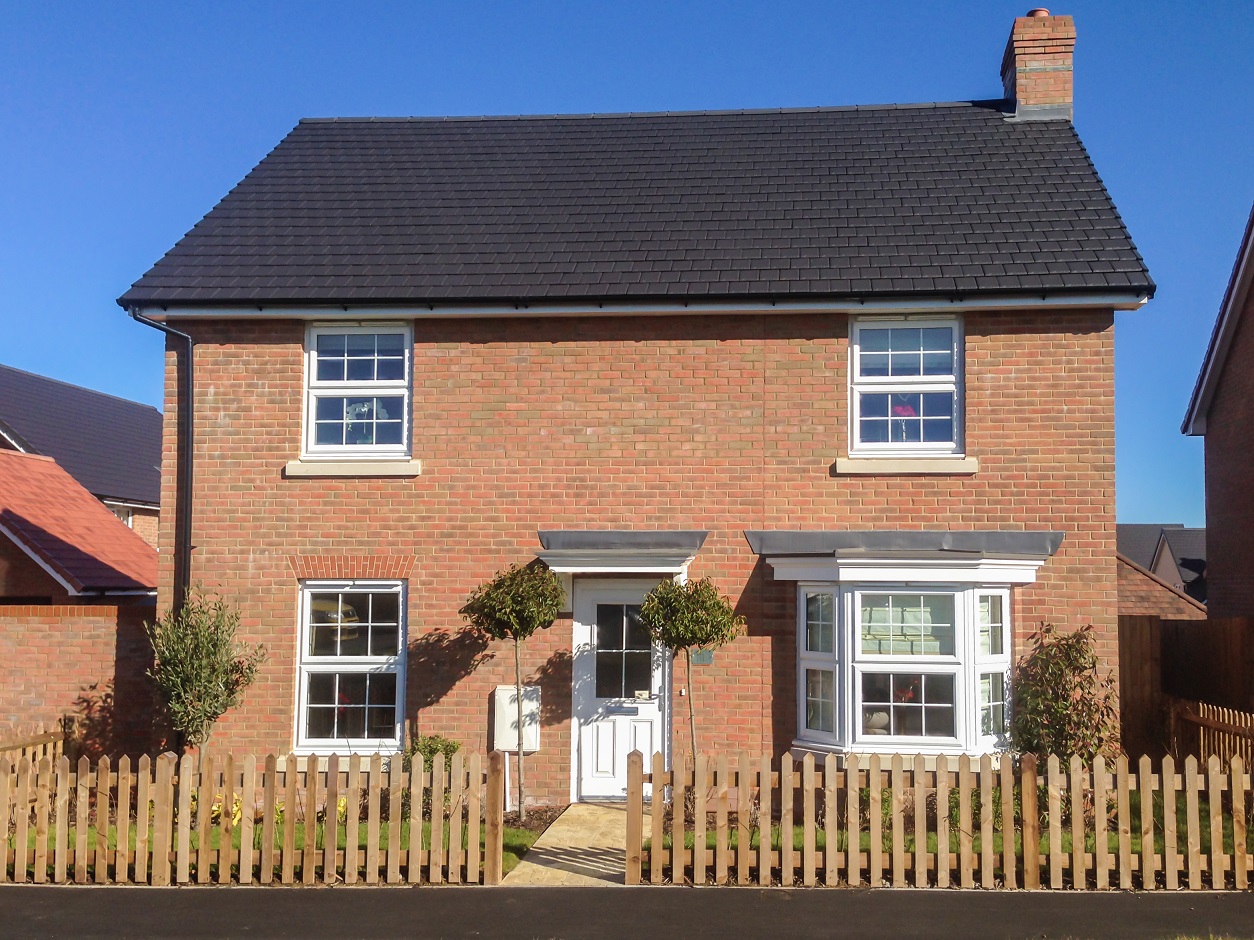
Now when you really weight the entirety of that it makes sense. With urban densification becoming more and more pronounced around the world, it’s becoming more and more challenging for even the most financially well-equipped to live the detached home and 2-car garage / picket fence ideal. So these significantly more deep-pocket would-be buyers are looking EVEN FURTHER outside of town.

It may be a bit of a commuter nightmare for some, but these homeowners aren’t going to be overly concerned with the price of motor fuel. (Nearly $1.60 or higher per litre here in Vancouver these days)

The Trend

These ‘Exurb’ secondary municipalities, some being located as far as double digit or even hundreds of kilometres from the large urban markets, have slowly become more viable purchase destinations amid high housing costs. Some may be choosing community and lifestyle over ‘urban excitement’ and career opportunities, and it seems that many of them are skipping the suburbs right now and going even farther out.

Some info contained in a recent survey conducted by Queens University:

  • As of 2016, 3/4 of Canadians are living in suburban communities
  • From 2006 to that year, exurbs experienced 20% population growth, and auto-dependent suburbs experienced 17%
  • 8 of the top 10 fastest appreciating exurbs nationwide are in Ontario, and specifically in areas surrounding Hamilton, London, Windsor, Kingston, Guelph, and the Tri-Cities, among other locations
  • For BC, secondary municipalities in the Hope area beyond the Fraser Valley and Kamloops Exurbs regions saw the most growth

The connecting theme between all of these is they’re a significant ways away from a metro region, but overall that’s not as daunting as it used to be for people. Another reputable-source study found that – not surprisingly – elevated prices weigh heaviest among the minds of young and first-time buyers.

It will be advantageous for realtors to expand the boundaries of their areas of familiarity and expertise to go beyond where they’ve consolidated their efforts, and particularly so for more well-to-do clients as compared to the way it would previously.

All of this is of course connected closely to being put in touch with these types of clients. Sign up for Real Estate Leads here and receive a monthly quota of qualified, online-generated buyer and / or seller leads delivered to you exclusively and for your own privately-served region of any city or town in Canada. Harness the power of Internet marketing and get a leg up on your competition that puts you in direct contact with people who are genuinely considering buying or selling a home.

After all, there has to be something to be said for having the first crack at turning prospects into clients for your real estate business!
Young Canadians Still Holding onto Detached Home Aspirations

Published March 19, 2019 by Real Estate Leads

Much has been made lately of the way the new home development industry has shifted more and more to a focus on condominium development over the years due to land constraints, average consumer purchasing power, and the need to build upwards in popular major metro areas in Canada. All of this continues with just the same energy as before, and it is true that multi-family housing development IS the future of housing in Canada’s big cities whether people like it or not.

Successful realtors adapt to the new realities of the industry, and it’s likely fair to say that the majority of first-time homebuyer clients are going to be looking at condos exclusively if they’re looking for a first home in Vancouver, Calgary, or Toronto. Where you put your energies is a very strategic decision, and being more explicitly in the know about the condo market may be an advantage. However, it would seem that the classic dream of a detached home with a backyard and every other kitschy appeal isn’t one that some people are willing to forego.

Here at Real Estate Leads, our online real estate lead generation system is a proven effective way of being put in touch with prospective clients who are genuinely considering buying or selling a home sometime in the near future. As far as would-be home buyers are concerned, they may well have their eyes on a condo that’s in town and near to work for the couple, but if there’s kids in the picture they may well be willing to take on a higher mortgage (provided they’ll qualify) and accept a longer commute to have everything a detached home has to offer.

So what’s the ins and outs of why some young people aren’t willing to give up on owning a detached home like the one many of them were likely raised in? Let’s have a look at that here today.

Still Worth It for Some

It’s a given that condo supply in the country’s largest markets will see significant increases in the near future, but a recent Globe and Mail report indicated that for the most part young professionals and those starting families will still prefer to buy and live in single-detached homes.

Federal policy focused on boosting the availability of low-cost condo units in downtown areas is smart and well intentioned, but it has unwittingly encouraged urban sprawl by forcing more Canadians to look further out into the suburbs to be able to realize their dream of a owning a detached, single-family home with a yard.

Why most – especially singles or couples – would see a condo as their best fit is fairly easy to understanding; they’re more likely to be able to extend the amortization period on insured mortgages, easing the stress test introduced last year or increasing the $750 tax credit for first-time buyers.

However, it seems that many millennials still ultimately aspire to purchase single-family homes.

Look at Montreal

Greater Montreal is a good place to see this phenomenon playing out. Updated numbers provided by the Quebec statistics agency showed that nearly 24,000 residents (many of whom met ‘young household’ criteria) moved from Montreal to the suburbs and beyond over the course of 2018. This migration was the largest off-core one since 2010.

The consensus seems to be that attempts by policy makers and urban planners to coax Canadians into accepting condo living as a semi-permanent state in life may come from good intentions, but it is has not stopped millennials from dreaming the suburban dream and realizing that 600-square feet is going to impinge their quality of life to an extent that many of them will deem unacceptable.

If you’re a realtor in one of these pricey urban areas you’d be well advised to NOT approach any young buyer individual / couple without kids with the assumption that they’re going to want to get into a condo. Yes, most will but you shouldn’t make any assumptions – especially for the reasons being laid out here.

Willing to Commute

It seems that younger Canadians are willing to take their mobility in their own hands if it means having their own suburban single-detached property. If a big yard for the kids is a must, many of them are willing to spend 2 or more hours of their day getting to work and back. That of course has it’s own negative ramifications, but it is what is in as far as understanding your prospective clients’ motivations.

It is true that more Canadians than ever are driving to work, proof that efforts to promote mass transit and densification have done little to kill the dream of a house in the suburbs. If that’s what a client wants and is willing to pay for (both in financial terms and what they’ll pay for in lost time commuting) then you’ll be best served by understanding and relating to their buyer prerogatives and catering to them like any good real estate agent would.

Sign up for Real Estate Leads here and receive a monthly quota of qualified, online-generated buyer and / or seller leads delivered to you exclusively for your privately-served region of any city or town in Canada. You can count on having many bonafide opportunities to turn these leads into clients, and it’s a fact that most realtors who’ve already gotten on board with this see it as 100% worthwhile investment in the current and future success of their real estate business.